
CERN-MEDICIS
“When you invest in MEDICIS, you are investing in the future.”
Dr John Prior, Lausanne University Hospital (CHUV)
Accelerating cancer research
Innovative ideas and technologies from physics have contributed to great advances in the field of medicine since the advent of radiation-based medical diagnosis and treatment and following the discovery of X-rays and radioactivity.
Radioisotopes are already widely used by the medical community for imaging, diagnosis and radiation therapy. However, many of those currently used do not combine the most appropriate physical and chemical properties and therefore do not target tumours closely enough. In some cases, a different type of radiation could be better suited.
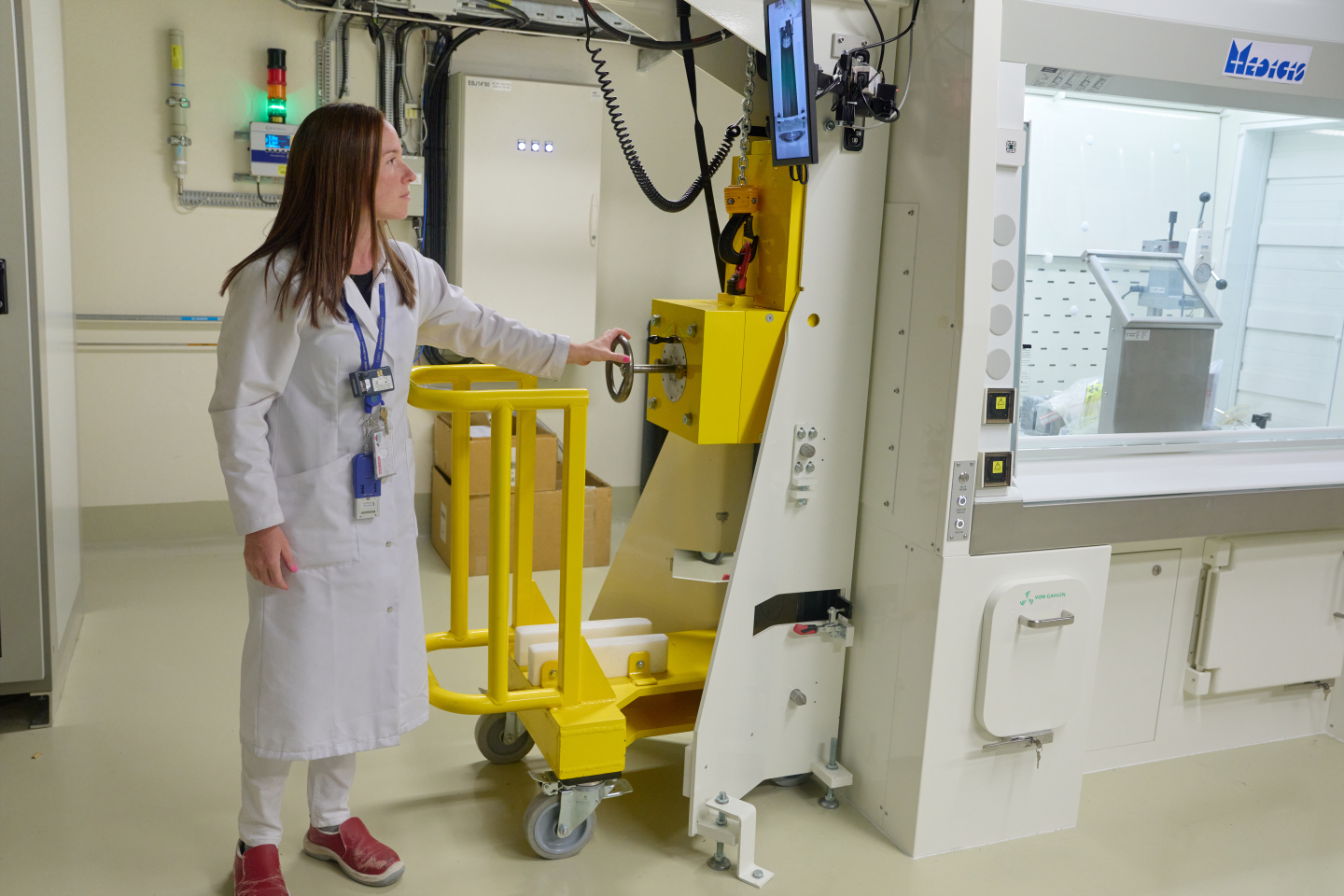
CERN-MEDICIS (Medical Isotopes Collected from ISOLDE) is a unique facility designed to produce radioisotopes with the right properties to enhance the precision of both patient imaging and treatment, and provide the opportunity to radically improve the success of cancer treatment. It expands the range of radioisotopes available for medical research – some of which can be produced only at CERN – and sends them to hospitals and research centres in Switzerland and across Europe for further study in medical imaging and therapy.
Great strides have been made recently in the use of radioisotopes for diagnosis and treatment, and MEDICIS enables researchers to devise and test unconventional radioisotopes with a view to developing new approaches to fight cancer.
Key benefits include:
• It has expanded the range of radionuclides available for biomedical research, including
through the EU-funded project PRISMAP.
• It has contributed to the development of high-efficiency separation techniques, resulting
in improvements to purity levels that make them safer, more effective and more
predictable in clinical and research use. These techniques are also relevant for future
accelerator-based radionuclides production facilities.
• CERN-MEDICIS radionuclides have been used for pre-clinical studies, demonstrating their
future potential use for cancer diagnostic and treatment methods for human patients.